Standard Ticket
Castle entry · standard queue
€36
- Bran Castle entry — keep, royal apartments, courtyards, secret passage
- 5-minute audio history sent before your visit
- Booking handled in English on the operator portal
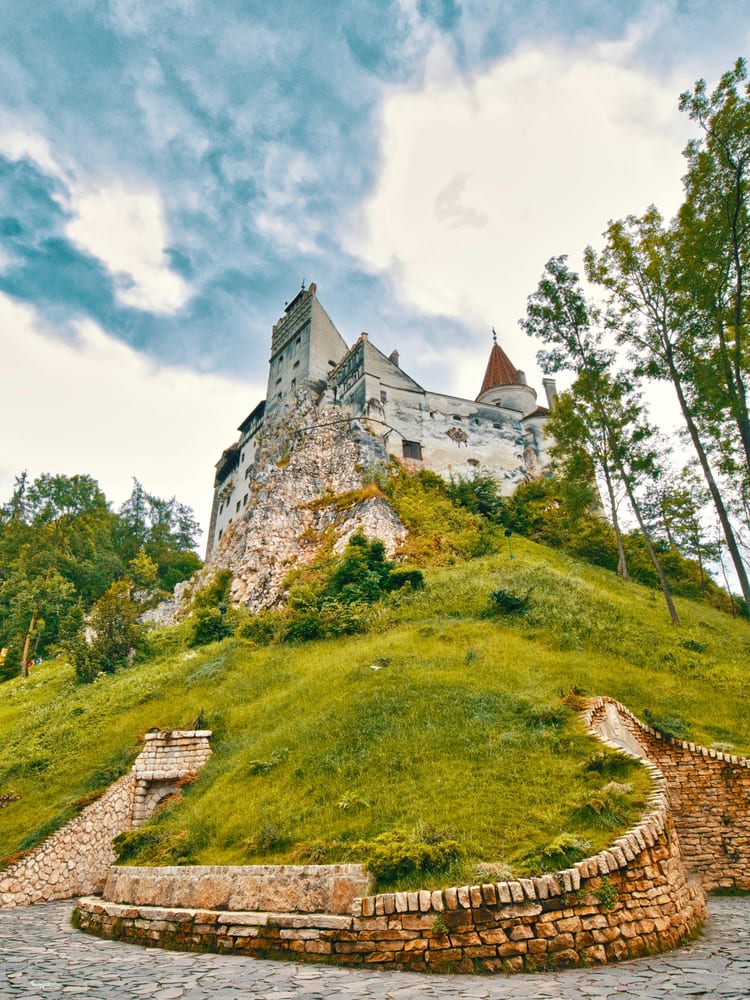
Bran Castle skip-the-line — the cliff-top stronghold 25 km from Brașov that Bram Stoker never saw but every Dracula reader pictures, then served as Queen Marie's royal residence between the wars. Timed slot reserved before peak-season days fill.
See ticket optionsCastle entry · standard queue
€36
Castle entry · skip-the-line
€50
Castle entry · skip-the-line · live English guide
€70
Group of 4 visitors · same date · saves vs buying 4 separately
€144 €110 Save €34
“We arrived ten minutes before our slot, walked past a queue that wrapped around the rock, and were inside the keep within five minutes. The audio guide before the trip set the right expectations — Dracula is the marketing, Queen Marie is the real story.”
“Booked from Brașov the night before. Tickets in the inbox by morning, slot was 11:00, no wait at the gate. Saved us from coming all this way and queueing two hours.”
“Castle is smaller than the photos suggest but the secret passage and the views from the upper terraces made it for us. Concierge replied to a date-change in two hours.”
5-minute audio guide
A short, calm narrative — what this fortress actually is, why it isn't really Dracula's castle, why Queen Marie made it her summer home, and what to look for inside. Listen on the bus from Brașov.
Recorded for Bran Castle Tickets concierge. Free to download.
Bran Castle is the 14th-century stone fortress that international visitors most often associate with Bram Stoker's Dracula — though the historical record is more interesting than the marketing. Built from 1377 onward by the Saxons of Brașov as a defensive customs post on the mountain pass between Transylvania and Wallachia, it stands on a 200-foot rocky outcrop above the Bran Gorge, 25 kilometres southwest of Brașov in central Romania.
The castle's modern character comes from Queen Marie of Romania, who received Bran as a gift from the city of Brașov in 1920 and spent the next two decades transforming the medieval fortress into a personal retreat. The narrow rooms, painted ceilings, and collection of art and furniture you walk through today are her work, preserved as a museum since 2009 when the castle re-opened as Romania's first private museum under the heirs of the Habsburg royal family.
Visitors typically spend 1.5–2 hours inside, climbing the medieval staircases through royal apartments, secret passages, and courtyards. The Dracula association is acknowledged in a small basement exhibition; the rest of the castle is the real story — a customs fortress turned royal home turned national heritage site.
Dracula's Castle Tickets acts as a facilitator to assist international visitors in purchasing entry tickets directly from Compania de Administrare a Domeniului Bran, the Habsburg-family-owned operator. We do not resell tickets — we provide a personalised booking and English-language support service. Our concierge service fee is included in the displayed price. For those who prefer to purchase directly, the official ticket site is bran-castle.com.
Plan your visit
Carpathian seasons, weekly visitor rhythms, the Halloween week phenomenon and the precise hours that reliably beat the coach-tour wave.
The 45-minute bus from Brașov, the 4-hour rail-plus-bus from Bucharest, the day-trip combinations and the winter-weather buffers that catch first-time visitors out.
Vlad III never lived here. Bram Stoker never visited Romania. The castle was a medieval customs post and a queen's summer home — the Dracula brand is a twentieth-century overlay.
Bran Castle is universally marketed as Dracula's Castle, but the historical record is more nuanced. Bram Stoker never visited Transylvania and the castle is not mentioned in his novel. Vlad III (the historical Dracula) most likely never lived here either — historians agree his imprisonment by the Hungarians in 1462 was at a fortress in Budapest, not Bran. The real history is the customs fortress turned royal residence — which is the more interesting story.
Entry to the castle keep, all open royal apartments, the inner and outer courtyards, the secret passage, and any current temporary exhibitions. Your timed slot is reserved before you arrive so you bypass the gate ticket queue.
10–15 minutes before your booked slot. Arriving earlier is fine but you won't be admitted before your time. Arriving late may push you to the next available slot, especially in peak season.
Plan on 1.5–2 hours inside the castle. Add 30 minutes for the souvenir village at the foot of the rock, where you'll find cafés and the famous (and very touristy) Dracula souvenir stalls.
Yes. Tuesday–Sunday 09:00–18:00, Monday 12:00–18:00. The operator may shorten hours on national holidays — confirm on the day if travelling on or near 1 December (Romanian National Day), Easter, or Christmas.
Bran is in the Carpathian foothills at about 760 metres elevation. Summers (June–August) are warm but afternoon thunderstorms are common. Winters (December–February) are cold with snow — the castle is more atmospheric, the village quieter. October Halloween week is the busiest single window of the year.
Once booked, slots are non-transferable and non-refundable. If you need to change, contact us at bookings@draculascastletickets.com — we'll help where we can but cannot guarantee a new slot in peak season.
Yes — children typically love the castle (turrets, secret passages, dramatic gorge views). Strollers are tough on the stone staircases; a baby carrier is more practical. Reduced-price tickets apply to ages 7–17.
No. Bran Castle is a 14th-century stone fortress with narrow medieval staircases between floors and no lift. Visitors with mobility limitations should plan to view the exterior from the souvenir village or contact the operator (+40 268 237 700) for advice.
Tickets are issued for a specific date and are non-transferable once issued. If your plans change, reply to your confirmation email at least 48 hours before your date and we will rebook your visit to any open slot in the operator's calendar.
Bran Castle is a medieval stone fortress in central Romania, perched on a rocky outcrop above the Bran Gorge roughly 25 kilometres south-west of Brașov in the Carpathian mountains. First documented in a charter of 1377, when Louis I of Hungary granted the Saxons of Brașov the right to build it, it served for centuries as a defensive stronghold and a customs post guarding the mountain pass between Transylvania and Wallachia. The fortress is internationally famous as the place popularly marketed as Dracula's Castle, after Bram Stoker's 1897 novel, though Stoker never visited Transylvania and the building is not named in his book. Its modern character owes most to Queen Marie of Romania, who received the castle as a gift in 1920 and converted the medieval fortress into a comfortable royal residence, filling its narrow rooms with art and furniture. Since 2009 it has operated as a museum, and visitors today walk through royal apartments, courtyards, a secret staircase and battlements overlooking the gorge below.
Bran Castle stands in Bran village in central Romania, roughly 25 kilometres (about 30 km by road) south-west of Brașov, which is the usual base for a visit. From Brașov, public bus line 60 departs from Autogara 2 (Bus Station 2, beside the railway station) every 30 to 60 minutes and reaches Bran in about 45 to 50 minutes, stopping a short walk from the castle. By car or taxi the same journey takes roughly 30 to 45 minutes along the DN73 road through Râșnov. Parking sits at the foot of the rock and in small car parks nearby, charged at a modest hourly rate that fills early on summer weekends and during Halloween week. Visitors arriving from Bucharest usually take a train to Brașov, about three hours through the Carpathians, then continue by bus 60 or taxi for the final stretch to the castle gate.